Masonry restoration in Wilmington NC - mortar joints that let your brick dry out
Crumbling or cracked mortar between your bricks? We replace only the joints that need it, with a mix that suits your older wall.
- Services
- 16
- Service areas
- 12
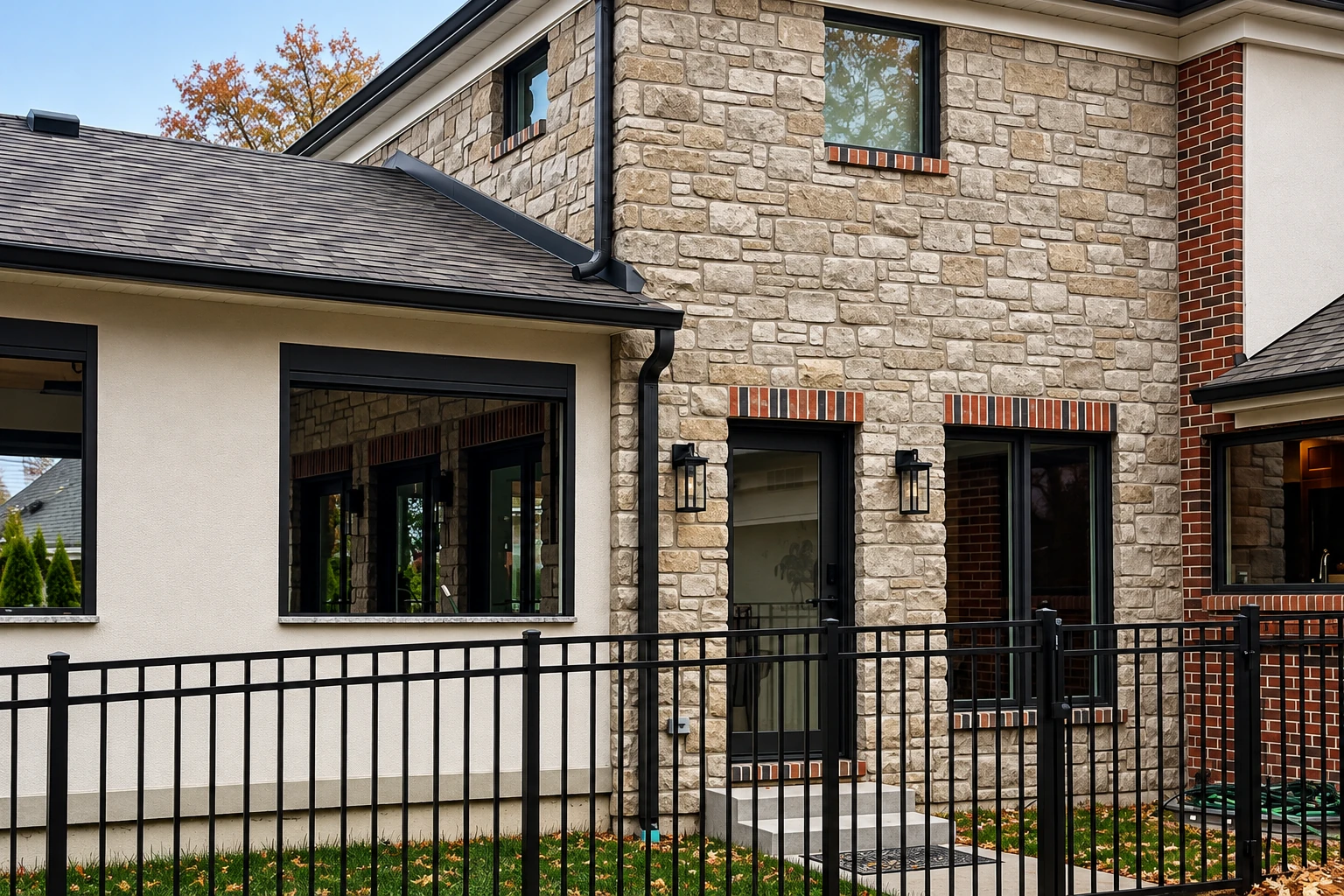
Ask us to look at your mortar
I walk the wall with you and point out which joints need work and which don't.
Request an estimateDoes my brick house need masonry restoration?
Masonry restoration in Wilmington, NC mostly comes down to repointing, where our crew cuts out the worn, crumbling mortar between your bricks and packs fresh mortar into those joints so the wall is tight and sound again.
Most people call us after they notice mortar that's gone sandy, crumbles when they rub it or sits back from the brick face, and they want to know how bad it really is. What moves the price is how many joints have to come out, how high and hard to reach they are and whether the wall needs cleaning first, and the schedule turns on those same things plus dry weather for the mortar to set and any historic review your street needs. If some of the bricks themselves are cracked or broken, that's brick repair, and I'll tell you which one you need when I walk the wall and write up your estimate.
How we handle masonry restoration
Here's how it goes. I walk the wall with you and we mark the joints that are actually failing, so nobody's guessing once the crew shows up. If the brick needs cleaning, we start gentle, about what a garden hose puts out, and only go stronger if the dirt won't come off, because harsh pressure can chew up the brick face and the joints you're trying to save. Then our masons rake the bad mortar out to a clean, even depth, mix new mortar to suit what's already in your wall, pack it in tight so it bonds and tool the joints to match the old ones. When we're done we don't coat bare brick with paint or sealer, since a wall has to be able to dry out, and a wall that holds water isn't a good wall no matter how it looks on day one.
Restoration often sits right next to other projects on the same house. If the brick around your hearth is too far gone to repoint, or you'd rather have a new one altogether, we handle fireplace installation too. And if you've got a plain block wall or foundation face you'd rather dress up than restore, stone veneer installation puts a stone face on it.
What changes masonry restoration in Wilmington
New Hanover County's permits and inspections department issues building permits in Wilmington for alterations and remodeling, and its list doesn't name masonry restoration, so it's worth asking the county whether your job needs one. If your house sits in one of Wilmington's local historic districts or historic overlays, exterior alterations need a certificate of appropriateness from the city, which is how it keeps work in step with each district's historic character. The city's historic district design standards also say to leave unpainted masonry walls unpainted and unsealed, because paint or sealer could speed up their deterioration, and that lines up with how we already treat bare brick. We tell you which office handles your address and whether a historic review could come into your job, and we help you get the paperwork together before work starts.
We're based in Wilmington and work across the cities around it, including the ones on this site and plenty more. A lot of what we see is older brick with soft mortar that's been patched over the years with something harder, and we find the same thing on jobs in Leland and Wrightsboro, so every wall gets the same joint-by-joint look before we touch it.
Why call us for restoration
The owner on your job
I'm the one who comes out to look at your wall, and I'm on site with our masons while the work gets done. You don't have to explain the job twice, and the person who priced it is the one watching the mortar go in.
Mortar work learned right here
I spent years as another mason's right hand in Wilmington before I started this business in 2021, and careful mortar work on older brick is what we're best known for. On a restoration, the mix and how it's packed matter more than anything you can see from the street.
Fully licensed and insured crew
We're fully licensed and insured, and that's the first thing you should check with any crew working on your house. North Carolina law also requires a general contractor to be licensed once a project's total cost reaches $40,000, which is worth asking about if restoration is part of a bigger job.
You'll see what we did
When we finish, I walk the wall with you and point out the joints we redid and the ones we left alone. You'll understand what's in your wall and why, which helps when it's time to plan its next round of upkeep.
- Phone
- (910) 218-9550
- Hours
- Mon–Sun: 6 AM–11 PM
- Location
- Wilmington, NC 28403
On a restoration the part that counts is the mortar and whether the wall can still dry, so let me see yours in person. Have your address and a few close-up photos of the crumbling or cracked joints ready, then call (910) 218-9550 or request your estimate.
Get a written estimate for your masonry restoration
Send the form and we'll get back to you within one business day to set up a time. I come out, walk the wall with you and put a free estimate in writing, and there's no obligation to go ahead.
- Phone
- (910) 218-9550
- Location
- Wilmington, NC 28403
- Hours
- Mon–Sun: 6 AM–11 PM
- Credentials
- Fully licensed and insured.
Frequently asked questions
How do I know if my brick mortar needs repointing?
Your mortar needs repointing if it has worn back more than 1/4 inch from the brick face, crumbles, has holes or voids, shows hairline cracks or has cracks opening between the brick and the mortar. Look along the bottom of the wall and under windows first, since that's where joints usually go soft. When I come out, I'll point right at the ones that need work.
Can you repoint only the bad joints instead of the whole wall?
Yes, and that's usually the right call, because only defective joints need repair. Original joints in good condition are preferable to repointed ones, so we leave sound mortar where it is and work on the joints that are failing.
What type of mortar should be used to repoint an old brick house?
The new mortar should be similar to the old mortar in strength or weaker, not stronger. National brick guidance explains that a stronger mix pushes the wall's load onto the thin strip of new joints, and that stress can do damage to the brick face that can't be undone. The mortar also has to let moisture move out of the wall and evaporate, which is why preservation guidance points to lime mortar for historic buildings, since it's soft and porous and barely changes size as temperatures swing.
How long does repointing last on a brick wall?
Mortar joints typically last more than 25 years, while the bricks themselves can go well past 100. How long yours hold up depends on how exposed the wall is and what mortar went in, so plan on the joints needing attention more than once over the life of a brick house.
How much does masonry restoration cost in Wilmington?
The cost comes down mostly to how many joints need to come out and how hard they are to reach, because repointing is slow, hand-done work. A wall with a few bad patches at ground level costs far less than a two-story wall that needs cleaning and lifts or scaffolding. I'll walk the wall with you and give you the figure in writing.
Is repointing the same thing as tuckpointing?
Mostly, yes, since a lot of people say tuckpointing when they mean repointing, though the term isn't quite accurate for it. Repointing, sometimes just called pointing, means removing worn mortar from the joints and replacing it with new mortar, and you can read more on our tuckpointing page.
Related masonry work
Fireplace installation
When the old firebox or hearth brick is past saving, a new fireplace lets us lay it out properly from the start, with the right materials around the heat.
Stone veneer installation
A layer of stone can give a plain block wall, foundation or column a finished look without building a whole new wall behind it.